By YUEDAO EXPO | 12 March 2026 | 0 Comments
23AWG vs 24AWG Network Cables: Which to Choose for Your Project?
When purchasing network cables for your security, data center, or enterprise networking projects, one of the most common questions overseas buyers face is: What’s the difference between 23AWG and 24AWG network cables, and which one is the right fit for my project? Choosing the wrong wire gauge can lead to signal attenuation, unstable transmission, and even increased project costs—especially for long-distance or high-demand applications.
In this guide, we’ll break down the core differences between 23AWG and 24AWG cables, provide scenario-specific recommendations, and help you make an informed decision that aligns with your project needs and budget.
In this guide, we’ll break down the core differences between 23AWG and 24AWG cables, provide scenario-specific recommendations, and help you make an informed decision that aligns with your project needs and budget.
First, let’s clarify what “AWG” means. AWG (American Wire Gauge) is a standard used to measure the diameter of electrical conductors, including the copper cores in network cables. The key rule to remember: the lower the AWG number, the thicker the copper core. This thickness directly impacts the cable’s electrical performance, flexibility, and cost—three factors that are critical for overseas procurement decisions.
Core Differences Between 23AWG and 24AWG Network Cables
To help you understand the practical impact of wire gauge, we’ve detailed the key differences between 23AWG and 24AWG network cables, focusing on the factors that matter most for security and communication projects:
1. Wire Diameter and Copper Core Thickness
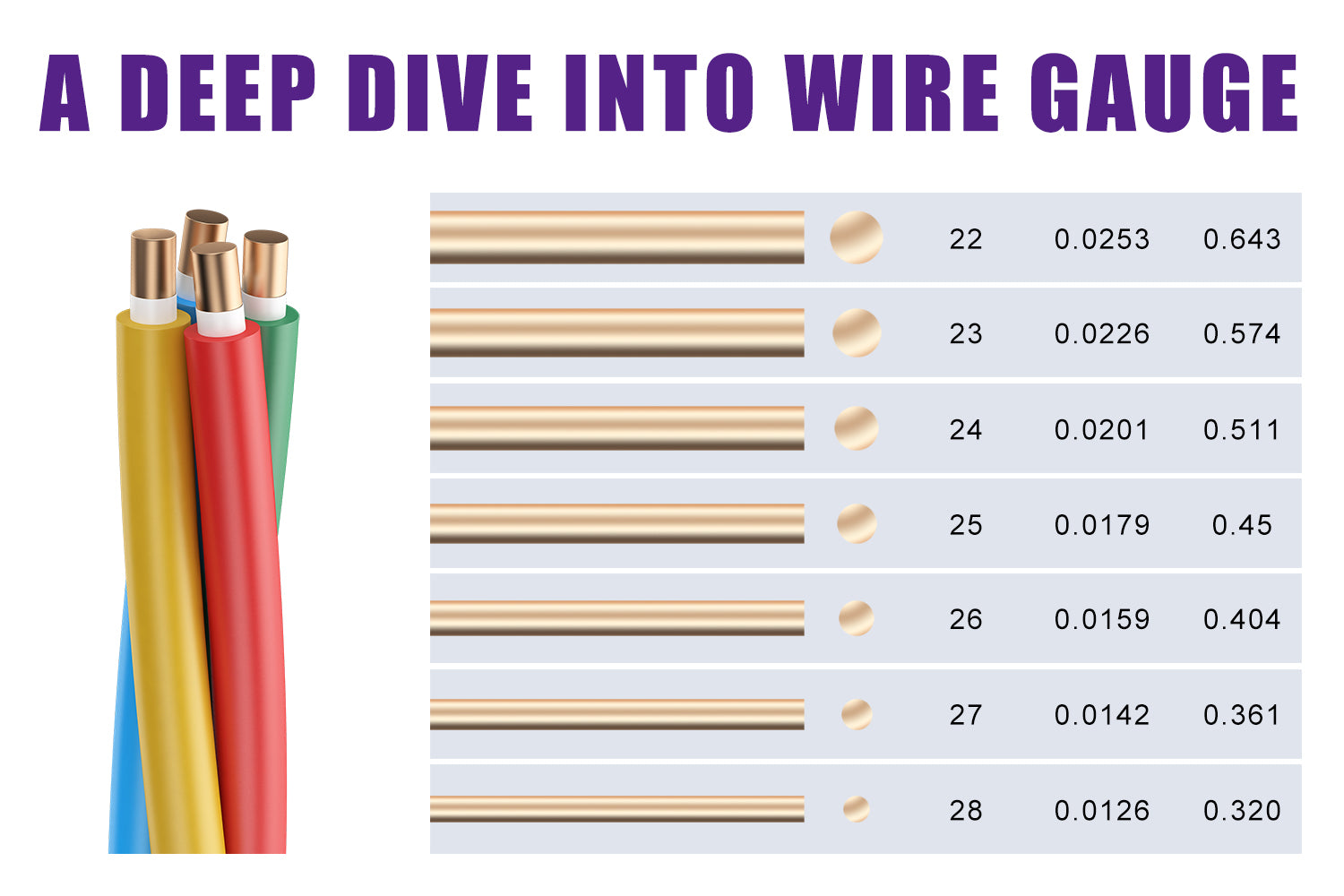
The most fundamental difference is the thickness of the copper conductor. A 23AWG cable has a copper core diameter of approximately 0.57mm, while a 24AWG cable has a slightly thinner core of around 0.51mm. This 0.06mm difference may seem small, but it has a significant impact on the cable’s overall performance—especially in terms of conductivity and signal transmission.
2. Electrical Conductivity and Resistance
Thicker copper cores offer better electrical conductivity because they have less resistance to current flow. According to industry standards, a 23AWG copper conductor has a maximum resistance of ≤9.3Ω per 100 meters, while a 24AWG conductor has a maximum resistance of ≤10.1Ω per 100 meters. This means 23AWG cables experience less signal loss during transmission, making them ideal for applications that require stable, high-speed data transfer.
3. Transmission Distance
Signal attenuation (loss) increases with distance, and the thickness of the copper core directly affects how far a cable can transmit data without degradation. Under the same conditions (e.g., same shielding, insulation, and transmission speed), 23AWG cables can transmit data 5-10% farther than 24AWG cables. For example, if a 24AWG Cat6 cable can reliably transmit 10Gbps data up to 90 meters, a 23AWG Cat6 cable can extend that distance to 95-100 meters—critical for large-scale projects like data centers or campus-wide security networks.
4. Flexibility
Flexibility is another key consideration, especially for projects that require frequent bending or tight routing (e.g., robot connections, temporary wiring, or narrow wall cavities). Since 24AWG cables have a thinner copper core, they are more flexible than 23AWG cables. This makes them easier to install in tight spaces and less likely to break or damage when bent repeatedly.
5. Cost
Cost is always a priority for overseas bulk buyers. Because 23AWG cables use more copper (due to the thicker core), they are slightly more expensive than 24AWG cables—typically 5-10% higher in price. For large-scale projects with tight budgets, this cost difference can add up, making 24AWG a more cost-effective choice when performance requirements allow.
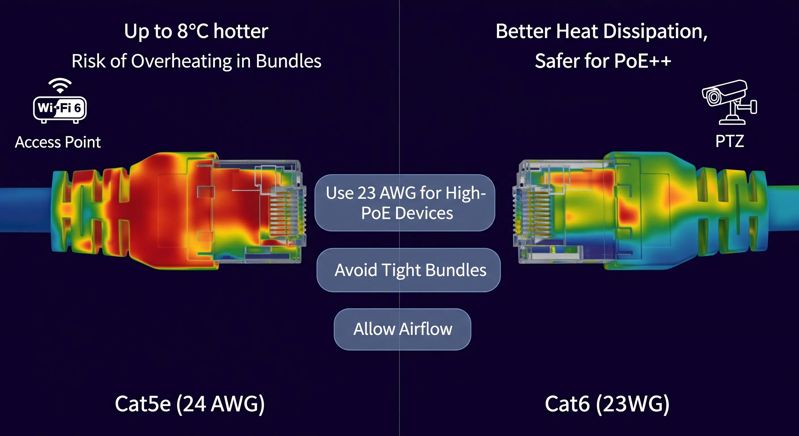
Scenario-Specific Selection Guide
The best wire gauge for your project depends on your specific needs—including transmission distance, installation environment, and budget. Here’s a practical guide to help you choose between 23AWG and 24AWG network cables:
Choose 23AWG If:
-
You need long-distance transmission (over 80 meters) with minimal signal loss. This is common in data centers, large enterprise backbone networks, or campus-wide security systems where cables run long distances between buildings or equipment.
-
Your project requires high-speed data transfer (e.g., 10Gbps or higher) and maximum signal stability. 23AWG’s lower resistance ensures consistent performance, even in high-bandwidth applications like 4K security cameras or high-frequency trading systems.
-
You’re installing fixed布线 (permanent wiring) that won’t be bent or moved frequently. The thicker copper core of 23AWG cables offers better durability for long-term, fixed installations.
Choose 24AWG If:
-
Your project involves short-distance transmission (under 80 meters) and cost is a key concern. For example, small office networks, retail store security systems, or residential smart home布线 where cables are short and signal loss is not a major issue.
-
You need flexible cables for installations that require frequent bending or tight routing. This includes robot connections, temporary event setups, or wiring in narrow spaces (e.g., between server racks or in wall cavities).
-
You’re working on a budget-sensitive project where the 5-10% cost savings of 24AWG cables can make a significant difference, without sacrificing performance for your specific needs.
CloudTop’s 23AWG and 24AWG Cable Advantages
At CloudTop, we understand that overseas buyers need reliable, high-quality network cables that meet their project’s unique requirements. That’s why our full range of network cables—including Cat5e, Cat6, Cat6A, and Cat7—are available in both 23AWG and 24AWG options, all crafted with 99.99% oxygen-free copper (OFC) cores.
Our OFC conductors ensure low resistance, minimal signal loss, and long service life—regardless of wire gauge. We also provide detailed wire gauge parameter test reports, so you can verify the performance of our cables before making a bulk purchase. Whether you need the long-distance stability of 23AWG or the flexibility and cost-effectiveness of 24AWG, we can help you select the right option for your project.
Final Recommendation
In summary, 23AWG network cables are the best choice for long-distance, high-speed, and fixed integrated-wires applications where signal stability is critical. 24AWG cables are ideal for short-distance, flexible, and budget-sensitive projects where cost savings and ease of installation are priorities.
Not sure which wire gauge is right for your project? Contact CloudTop’s professional procurement consultants for a free wire gauge selection plan. We’ll assess your project’s wiring length, application scenario, and budget to recommend the perfect 23AWG or 24AWG network cable—ensuring optimal performance and cost-effectiveness. Click here to view our full range of network cables and get a free quote today.
https://cloudtopcable.com/collections/data-cable
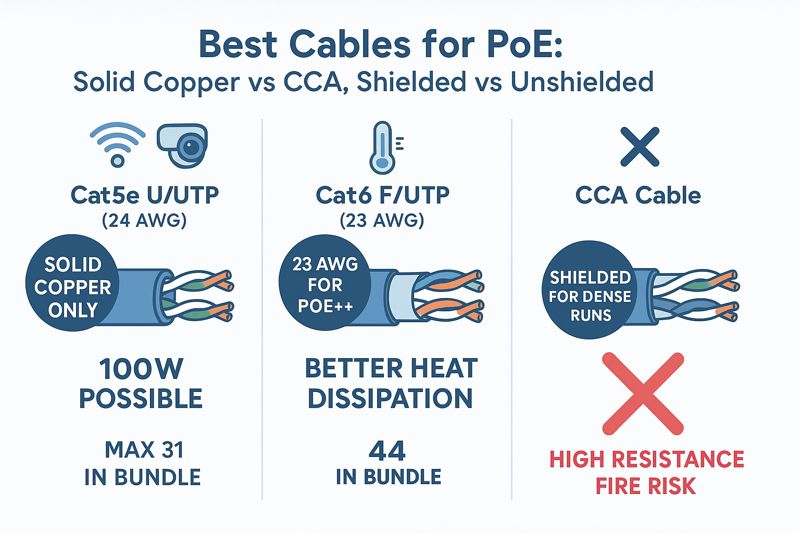
https://cloudtopcable.com/collections/data-cable
Keywords: 23AWG Cable, 24AWG Network Cable, Copper Cable Gauge, Network Cable Diameter, OFC Network Cable, CloudTop Network Cable
Leave a Reply
Your email address will not be published.Required fields are marked. *