AI Data Center Cabling: Infrastructure for Machine Learning Era
The rapid advancement of artificial intelligence and machine learning has transformed data center requirements. As organizations increasingly deploy AI workloads, traditional data center cabling infrastructure faces new challenges in terms of bandwidth, latency, and reliability.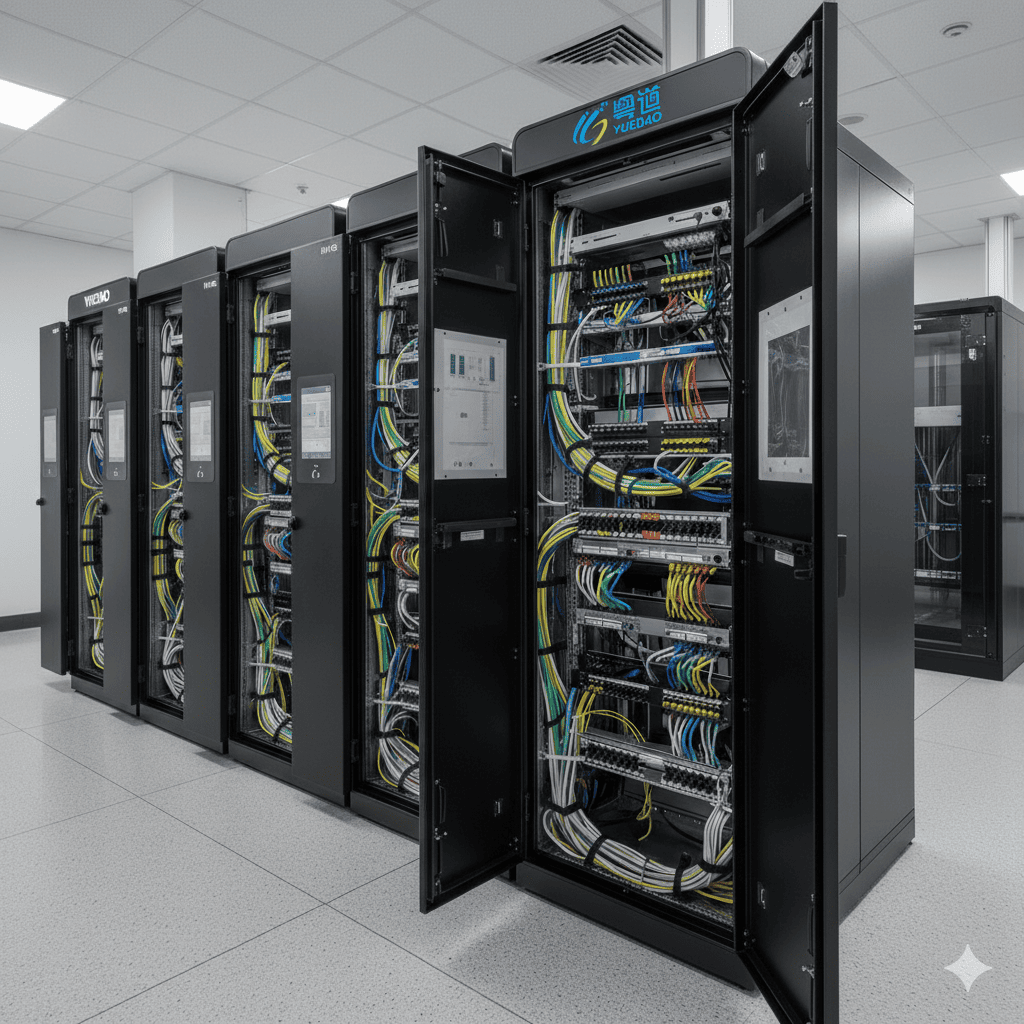
Key Cabling Technologies for AI Data Centers
High-Speed Fiber Optic Solutions
- OM4 and OM5 Multimode Fiber: Short-reach connections within racks and between adjacent racks
- OS2 Single-Mode Fiber: Long-reach connections across data center halls
Advanced Copper Solutions
- Cat6a and Cat8 Copper Cabling: Server management and out-of-band connections
Specialized AI Interconnect Cabling
- InfiniBand and High-Speed Ethernet: GPU-to-GPU direct communication
AI Data Center Network Topologies
Leaf-Spine Architecture
The leaf-spine architecture has become de facto standard for AI data centers due to its predictable performance and scalability.
Fat-Tree (Clos) Architecture
Fat-tree networks provide full bisection bandwidth, making them ideal for all-to-all communication patterns common in AI training.
Cable Management Best Practices
Physical Cable Management
- Horizontal Cable Management: Use cable management panels with proper bend radius protection
- Vertical Cable Management: Install vertical cable managers with adequate capacity
- Rack-Level Cable Management: Use cable management arms for patch panels
Cable Labeling and Documentation
- Labeling Standards: Use durable, heat-resistant labels
- Documentation Requirements: Maintain detailed cable maps and diagrams
Testing and Certification
- Fiber Optic Testing: Perform insertion loss testing
- Copper Testing: Perform certification testing to relevant standards
Vertical Cable Management
- Vertical Cable Management: Install vertical cable managers with adequate capacity
- Rack-Level Cable Management: Use cable management arms for patch panels
Cable Labeling and Documentation
- Labeling Standards: Use durable, heat-resistant labels, include cable type, length, and destination information
- Documentation Requirements: Maintain detailed cable maps and diagrams, document cable paths and connections
Testing and Certification
- Fiber Optic Testing: Perform insertion loss testing, measure return loss for all connections
- Copper Testing: Perform certification testing to relevant standards, test for near-end crosstalk (NEXT) and far-end crosstalk (FEXT)
Power and Cooling Considerations
Power Cabling for AI Infrastructure
- High-Power Distribution: Use appropriate gauge cables for high-current applications, implement proper power factor correction
- Power Monitoring: Install power monitoring at rack level, implement power usage effectiveness (PUE) tracking
Cooling and Airflow Management
- Cable Impact on Cooling: Maintain proper airflow paths, avoid cable obstructions in hot and cold aisles
- Thermal Considerations: Monitor temperature at cable level, use temperature-rated cables for high-temperature environments
Future-Proofing AI Data Center Cabling
Scalability Planning
- Capacity Planning: Oversize cable pathways for future expansion, plan for additional fiber strands
- Modular Design: Implement modular cabling systems, use pre-terminated solutions for rapid deployment
Technology Evolution
- Emerging Technologies: Prepare for 800G and 1.6T Ethernet, consider silicon photonics integration
- Standards Compliance: Follow TIA/EIA and ISO/IEC standards, stay updated with IEEE standards
Implementation Checklist
Planning Phase
- Assess Requirements: Assess current and future AI workload requirements, determine network topology requirements
- Plan Scalability: Calculate bandwidth and latency needs, plan for scalability and growth
Design Phase
- Design Infrastructure: Create detailed network diagrams, design cable management system
- Select Components: Select appropriate cable types and specifications, plan power and cooling requirements
Procurement Phase
- Source Components: Source high-quality cables and components, verify cable specifications and certifications
- Prepare Installation: Order appropriate quantities with spares, schedule delivery and installation
Conclusion
Building cabling infrastructure for AI data centers requires careful planning, specialized knowledge, and attention to detail. The unique requirements of AI and machine learning workloads demand high-bandwidth, low-latency, and highly reliable cabling solutions.
As AI continues to evolve and data center requirements grow more demanding, investing in proper cabling infrastructure today will pay dividends in performance, reliability, and scalability for years to come. Cloudtop Cable offers comprehensive cabling solutions specifically designed for AI data center environments, backed by expert technical support and industry-leading quality standards.